Roller Marks — Why You See the Track and How to Roll Flat
Roller marks are the track lines a roller leaves across a finished wall. Diagnose nap, cover quality, or technique, then sand the ridges, recoat the wall, and roll the next one without striping.

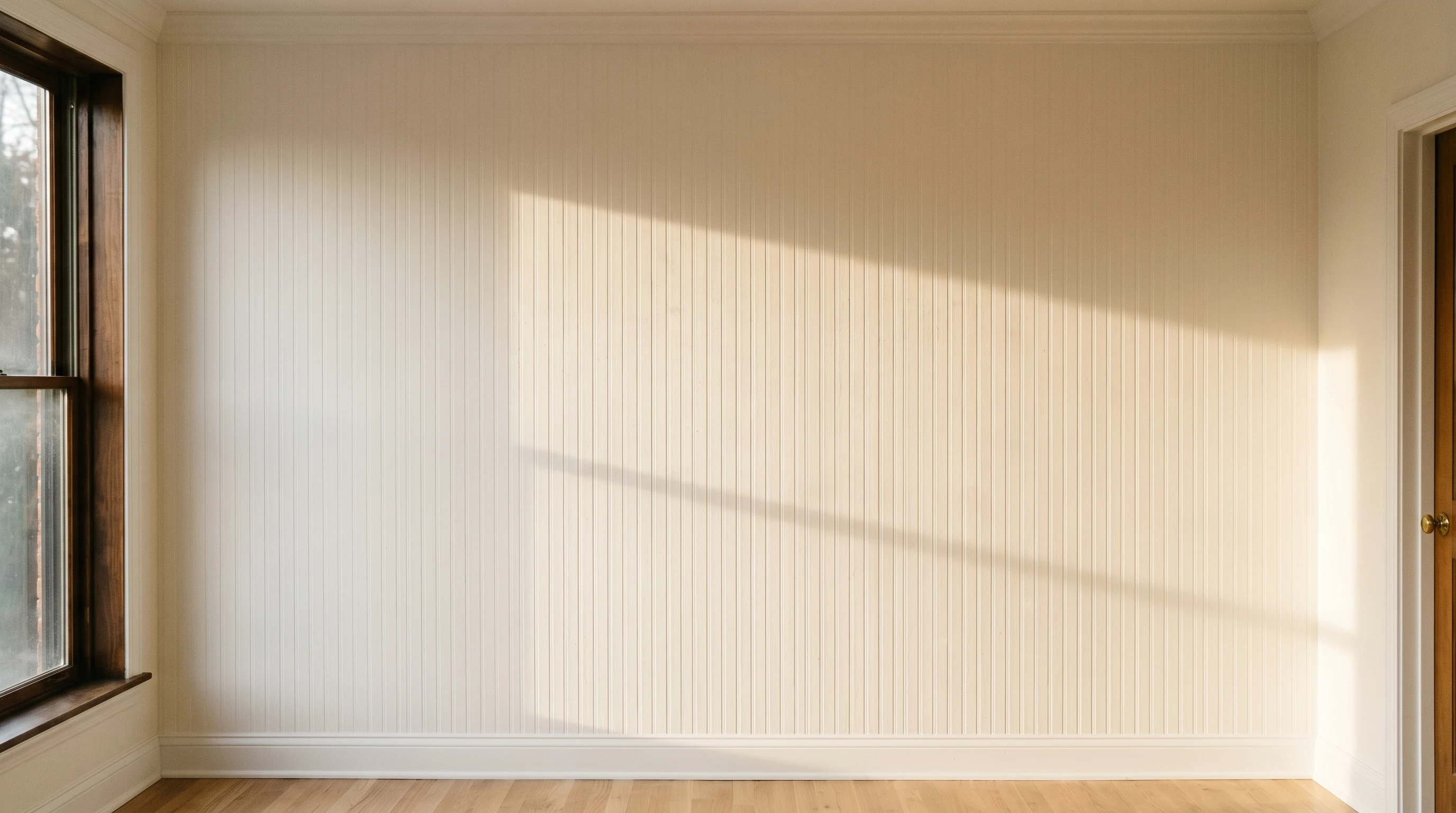
Roller marks aren’t a paint problem. They’re a tool problem you decided was the paint. Wrong nap, cheap cover, or a heavy hand on the roller pole leaves a track pattern inside a single wet section. Match the cover to the wall, back-roll the wet pass, and the stripes don’t get a chance to form.
Does this match what you’re seeing?
Look at the wall under raking light from the side. You’ll see one of these.
- Fine vertical stripes every few inches across the whole wall. Classic roller marks. The cover left a track and the paint didn’t level out behind it.
- Heavy stipple that reads like orange peel even though the wall is smooth. Wrong nap. Too long for the surface, laid down a thicker stipple than the drywall has texture.
- Faint horizontal track lines. You rolled horizontally on a wall, or you finished with a cross-stroke instead of a top-down smoothing pass.
- Lint and tiny fibers stuck in the dried film. Cheap cover shed into the paint. The cover is the problem, not the technique.
- Wide bands every 3 to 4 feet, not stripes inside the bands. That’s lap marks, not roller marks. Different fix.
If the pattern is striping inside a single wet section and the wall feels textured under your fingertip, you’re in the right article.
How serious is this
Cosmetic. The film is bonded and sealed. The wall protects the drywall and the paint does its job. What you can’t do is unsee the track once the morning sun lands sideways on it.
A second coat over the entire wall, with the right cover and a back-roll pass, fixes the problem in almost every case. Spot-fixing the track zone creates a sheen and thickness step that reads as a different problem next to the original. Whole wall.
Why roller marks happen (root cause)
Four causes account for almost every set of tracks I’ve seen on a finished wall. Ranked by how often they show up.
1. Wrong nap length for the surface texture. Most common by a wide margin. A 3/8 inch nap on textured drywall can’t reach into the low spots, so it lays paint on the high points and skips the valleys. The high-point stripes read as track. A 3/4 inch nap on smooth drywall lays a heavy stipple where the wall has no texture to absorb it, and the stipple reads as track too. Smooth wall takes 3/8. Light orange peel takes 1/2. Knockdown or popcorn takes 3/4. The “all walls” package on the contractor pack is lying to you.
2. Cheap roller cover. A $4 polyester cover from a contractor pack sheds lint, holds paint unevenly, and leaves a track pattern because the nap fibers aren’t uniform length. A $12 Wooster Pro or Doo-Z, a Purdy White Dove, or a Wooster Marathon lays paint flat because the fibers are dense, the same length, and don’t shed. The cover is the cheapest part of a paint job that has the biggest effect on how the wall looks. See best paint rollers for the full breakdown.
3. Loading and pressure problems. Too few passes leaves dry stripes where the roller ran out of paint. Too many over-rolls thin the film and pull tracks back into it. Pressing the roller hard against the wall squeezes paint out unevenly and loads the cover differently with every pass. Load the roller heavy, lay paint on with light pressure, smooth in one direction with a final top-down pass.
4. Paint thinned or conditioned wrong. Rolling unconditioned thick latex on a hot day leaves a track because the film flashes off before it can level. Over-thinning with water creates a thin film that won’t hide the cover pattern at all. Floetrol at half a cup per gallon is the right call. Water past 1 to 2 ounces per gallon is the wrong one.
Diagnose before you fix
Paint a test section and watch the first 60 seconds. If the track flattens out as the paint sets, loading or technique was the issue — slow down, load heavier, finish with a smoothing pass. If the track stays put, cover or nap is the issue and you need to swap the cover before another wall goes up.
The fix for existing roller marks
Step 1. Sand the raised tracks
Use 220 grit on a sanding block or pole sander. Light pressure, work the wall in long even strokes until your fingertip can’t feel the track ridges. Don’t sand to bare drywall — you only need to knock the high points off the cured film. Wipe with a tack cloth or a damp microfiber.
Step 2. Spot-prime if you sanded through
Anywhere you sanded down to drywall paper, spot-prime with Zinsser Bulls Eye 1-2-3. Twenty minutes dry, then move on. If you didn’t break the film, skip this step.
Step 3. Recoat the entire wall, not the track zone
Roll the whole wall corner-to-corner, top-to-bottom, in one session with the right cover and the right nap. A spot recoat leaves a sheen step and a film-thickness ridge, both visible under raking light. Whole wall.
How to roll without leaving track marks (the technique)
The discipline is the fix. Numbered because the order matters.
- Match the nap to the wall. Smooth drywall: 3/8 inch microfiber. Light orange peel: 1/2 inch. Knockdown or popcorn: 3/4 inch. Buy two if you have both surfaces. The cost of a second cover is less than the cost of repainting a wall.
- Buy a quality cover. Wooster Pro, Wooster Doo-Z, Purdy White Dove for ceilings, Wooster Marathon for exteriors. Skip the contractor 3-pack. Microfiber holds more paint and lays flatter than polyester at the same nap.
- Load the roller heavy. Run it through the screen until the cover stops absorbing. A starved roller leaves dry tracks before the paint runs out.
- Lay paint on, then smooth. First pass goes on with a W-pattern or zigzag to distribute paint across a 3 to 4 foot section. Second pass smooths it top-down without reloading.
- Back-roll with a barely loaded roller. This is the move. After the wet pass, run a near-empty roller across the same section in long top-down strokes. Levels the film, eliminates 80 percent of track marks, takes 30 extra seconds per section.
- Light pressure, not heavy. A heavy hand pushes paint out of the cover unevenly. Let the loaded roller do the work. If you’re leaning into the pole, you’re laying tracks in.
- Add Floetrol when the room fights you. Half a cup per gallon. Adds open time so the film can level out behind the roller before it sets.
Cover quality is not optional
The single best $8 you can spend on a paint job is the difference between a contractor 3-pack and a real Wooster or Purdy. The cheap cover sheds lint into the wet film, the fibers cure into bumps, and the wall reads rough in raking light forever.
Wooster Pro Doo-Z lays paint flatter than anything in the price range. Purdy White Dove is the ceiling pick. Wooster Marathon takes the punishment of exterior siding without breaking down. None of them cost more than $14 and all of them outlast the cheap covers by five jobs. See best paint rollers for the full set.
A good cover plus the wrong nap still leaves track. Match both.
Floetrol earns the shelf space
When the room is hot, dry, big, or all three, technique alone runs out of margin. Floetrol fixes that.
Half a cup per gallon, stirred in. Adds 30 to 50 percent to open time without thinning the film, without changing color, and without changing dry-to-touch by more than a minute. The leveling window stays open long enough for the roller pattern to flatten before the paint sets. Around $15 a quart, treats six to eight gallons.
It does not fix wrong nap or a cheap cover. A $4 polyester with Floetrol still sheds lint. What Floetrol does is widen the window where good tools work.
Safety
Eye protection during ceiling work. Paint drips off any roller pointed up. Cross-ventilate while painting, especially with conditioners. Never mix paint conditioners with bleach, ammonia, or hydrogen peroxide cleaners on the wall before painting. Toxic gas. If you cleaned with one of those, rinse with clean water and dry 24 hours before any paint goes on.
Common DIY mistakes
- Buying the contractor 3-for-$5 cover pack. Sheds lint, lays unevenly, leaves track. Spend the $12 on one good Wooster instead.
- Using 3/4 inch nap because the package says “all walls.” Way too much for smooth drywall, lays a heavy stipple that reads as roller marks. Match nap to surface.
- Painting in too-hot conditions. Past 80°F the film flashes before the roller can level. Drop the temperature, run the AC, or add Floetrol.
- Pressing hard on the pole. Pushes paint out of the cover unevenly and loads each pass differently. Light hands.
- Skipping the back-roll. A 30-second smoothing pass with a barely loaded roller eliminates most tracks. Skip it and you’re sanding tomorrow.
- Spot-fixing the track zone. Two visible problems instead of one. Whole wall, corner to corner.
Recommended product
Floetrol is the conditioner that keeps the leveling window open long enough for the roller pattern to flatten. Half a cup per gallon, no color shift, no compatibility issues with any latex or acrylic on the U.S. market. It pairs with a quality cover. Neither one alone is the fix.
For oil-based, the same brand sells Penetrol. Different bottle, same shelf. Don’t mix the two.
Prevention
- Match nap to surface every time. 3/8 smooth, 1/2 light texture, 3/4 heavy texture. Not “all walls.”
- Buy a real cover. Wooster Pro Doo-Z, Purdy White Dove, Wooster Marathon. Microfiber over polyester.
- Back-roll every section. A near-empty roller across the wet pass levels the film. Thirty seconds, eliminates most tracks.
- Add Floetrol over 70°F or in dry conditions. Half a cup per gallon, treat the whole job at once.
- Two coats. Always two coats. A thinned-out single coat won’t hide the cover pattern no matter how good the cover is.
- Don’t paint in direct sun, above 85°F, or below 50°F. The label numbers exist for a reason.
When to call a pro
- Whole-house repaints with vaulted ceilings or stairwell walls over 12 feet tall. Spray-and-back-roll is the right tool and the rental adds up to where a pro is the cheaper move.
- Heritage rooms with horsehair plaster where any sanding to fix track risks more damage than the marks themselves.
- Commercial spaces with raking architectural light (gallery walls, retail) where the tolerance for any pattern is zero. Pros spray these.
- Pre-1978 home where you’d be sanding cured paint. Lead test before sandpaper touches the wall. See how to fix peeling paint for the RRP rules.
What’ll bite you in two years
Track marks copy through a recoat. If the wall under your new paint already has a roller pattern, two coats of fresh paint over it transfers the ridges into the new film. Sanding the lap zone or the worst patch isn’t enough — the eye finds the rest. Sand the whole wall to 220 grit before the next paint job, top to bottom, every wall. Skip that and the next color has the same stripes as the last one.