How to Paint Aluminum Siding: Chalking, Dechalk Primer, and the Heat Trap
How to paint aluminum siding on a 1960s-1980s home — wipe-test for chalk, pressure wash with TSP and bleach, dechalk primer, then a 100% acrylic DTM topcoat.

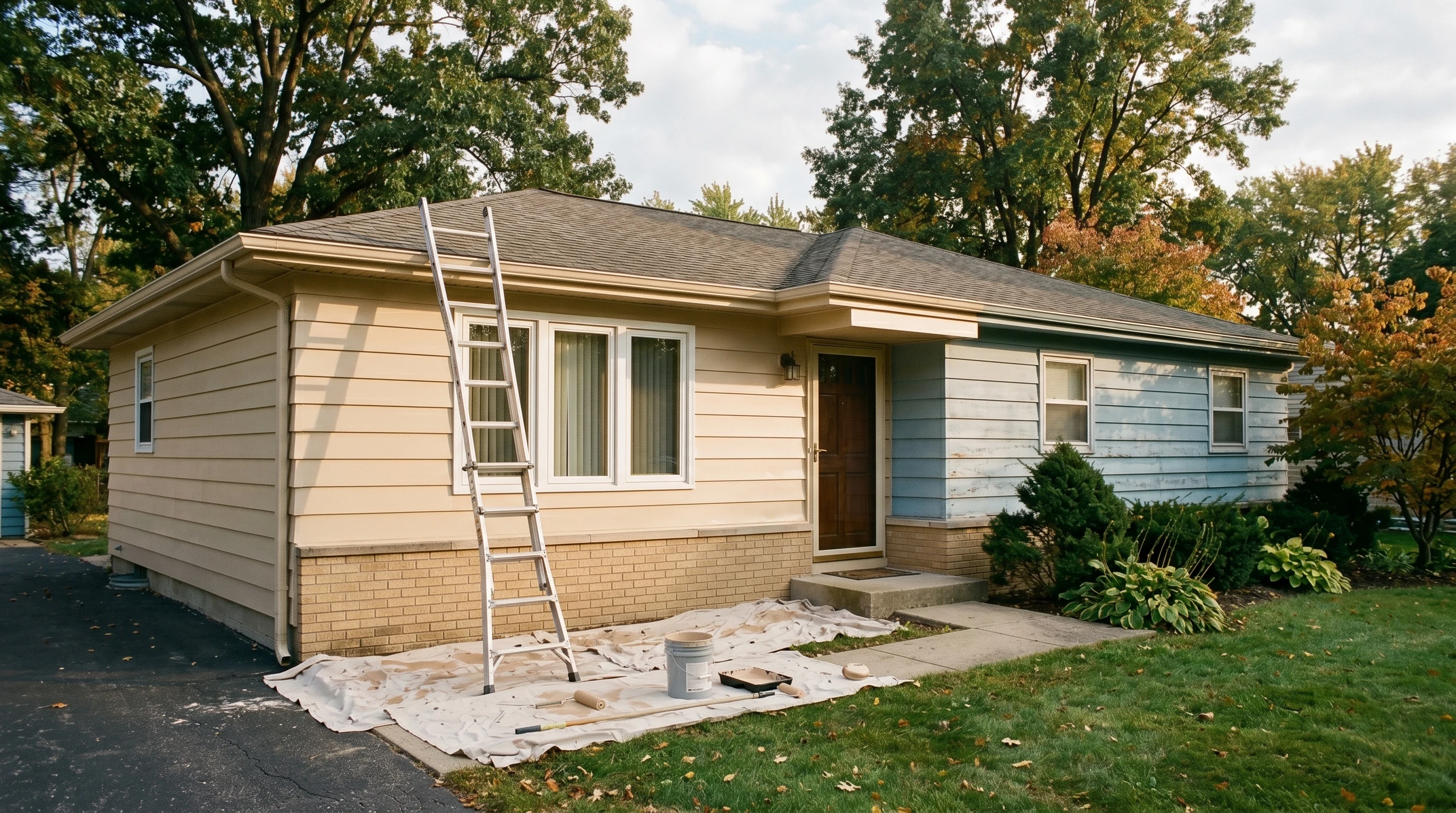
Aluminum siding from 1975? You’re not just painting. You’re rescuing chalk.
Aluminum siding wasn’t supposed to be repainted. When it went up in the 1960s and 70s, the factory baked-on enamel was a 30-year finish. Most homeowners and most builders treated it as permanent. The problem is arithmetic. A 1968 install is now 58 years old. A 1980 install is 46. The factory enamel’s been past its expected life for a decade or two by the time you’re up the ladder.
What you find on those walls isn’t paint. It’s a chalky, oxidized residue of paint, with the binder long gone and the pigment sitting on the surface like fine dust. Slap topcoat on that and the topcoat peels off in sheets the second summer. So the job isn’t really painting aluminum. It’s stripping chalk, bonding to what’s left, and rebuilding the system from scratch.
TL;DR
- Wash: TSP plus 1:10 bleach, soft brush, 1,500 PSI rinse
- Dechalk test: wipe a clean white cloth on the south face. Gray cloth means chalk and a bonding primer
- Primer: Zinsser Peel Stop Triple Thick, Behr Concrete & Masonry Bonding Primer, or SW DTM Bonding Primer over chalky siding. INSL-X Aqua-Lock on sound non-chalking aluminum
- Topcoat: 100% acrylic exterior (Aura Exterior, Duration, or Marquee Exterior). Two coats
- Color limits: LRV 40+ on south and west walls. Dark colors warp panels in summer
- Application: brush plus 1/2-inch nap roller for hand work, 517 tip airless for the full house
- Cure: 30 days before pressure-washing the new finish
- Skill: medium. The chalk wipe-test is the gate; everything else is just discipline.
Why aluminum siding is different
Three things that don’t apply to wood, drywall, or fiber-cement.
It chalks. UV breaks down the alkyd binder in the factory-baked enamel, and once the binder’s gone the pigment is loose. New paint over loose pigment has nothing to bond to. The chalk wipe-test is non-negotiable on any house older than 1990.
It heats. Aluminum’s thermal mass is low and its conductivity is high. A dark south-facing wall in July hits surface temperatures the original light factory colors were never expected to see. Dark over old aluminum on a sunny elevation can warp panels permanently inside one summer.
It’s soft. Aluminum lap siding is thin sheet metal hung on a wall. Lean a heavy roller into an unsupported section and you’ll crease it. Pressure-wash too close and you’ll dimple the face. Every step has to respect that.
How to read your siding before you buy a thing
Three quick checks. None of them takes more than ten minutes, and any one of them changes the materials list.
Chalk wipe-test. Clean white cotton cloth, dry. Rub a hand-sized circle on a south-facing wall in direct sun. Look at the cloth. Comes back clean, no chalk, and you’re on a sound substrate. Gray or wall-colored: chalk, and you’re committed to a dechalking primer. Heavy color transfer: heavy chalk. You may need two coats of primer or a power-wash with a chalk-binding additive.
Magnet test. Confirms it’s aluminum and not steel siding. Magnet won’t stick to aluminum. If it grabs, you’ve got steel siding (less common, different system, more in the metal guide).
Panel-press test. Press the face of a lap with two fingers. Sound aluminum springs back. Soft, deformed, or hollow-sounding spots mean something behind the panel has rotted or failed and the substrate fix comes before the paint job.
Materials
- Topcoat: 100% acrylic exterior. Benjamin Moore Aura Exterior, Sherwin-Williams Duration, or Behr Marquee Exterior. All three handle the UV and the seasonal movement on residential aluminum.
- Primer for chalky aluminum: Zinsser Peel Stop Triple Thick, Behr Concrete & Masonry Bonding Primer, or Sherwin-Williams DTM Bonding Primer
- Primer for sound non-chalking aluminum: INSL-X Aqua-Lock or SW DTM Acrylic Primer
- TSP or TSP substitute (Krud Kutter Original); household bleach for mildew
- Light-body auto body filler (Bondo) for dings and dents
- Stretchy elastomeric caulk (Sashco Big Stretch) for trim seams only. Not the laps themselves
For the Kompozit slot: Kompozit’s exterior acrylic line is a value option for residential aluminum siding. See /best/exterior-paint for the full SKU comparison.
Step 1: Wash and dechalk
Mix TSP at label dilution with a cup of household bleach per gallon for the shaded faces. Bleach kills mildew on north and east elevations; TSP cuts chalk and atmospheric grime everywhere else. Wet the wall, scrub with a soft-bristle car-wash brush on an extension pole, work bottom up so streaks don’t bake into dry siding above your work line.
Pressure wash to rinse. 1,500 PSI ceiling, 25-degree tip, 18 inches off the wall. Higher pressure dimples aluminum and forces water up under the laps where it sits and rots the sheathing.
Re-test with a clean cloth on the south face after the wall is dry. Still graying? Wash again. The wash is the prep. Rushing it is how you end up back on the ladder in two summers.
Then 24 to 48 hours of dry weather before primer.
Step 2: Repair, scuff, and feather
Dings and small dents get a feather of light-body Bondo, sanded flat at 30 minutes with 220 grit. Aluminum is soft, so Bondo bonds fine and sands easy. Big dents (anything that punched a panel in past the field) get a panel replacement. Filler over a deep deformation telegraphs through the topcoat as a visible scar.
Scuff-sand any spots where the old enamel is showing hairline curls or visible flash lines from old caulk repairs. 220 sponge, light pressure. You’re breaking the gloss, not removing material. Aluminum panels deform under aggressive sanding before they take a real cut, so go light.
Tack-cloth or vacuum the dust. Wipe down with a damp rag and let it dry an hour.
Step 3: Prime
Match the primer to what the wipe-test told you.
Chalky aluminum (most 1960s-1980s houses). Zinsser Peel Stop Triple Thick, Behr Concrete & Masonry Bonding Primer, or Sherwin-Williams DTM Bonding Primer. All three are formulated to penetrate light chalk, bind the loose pigment, and present a sound surface for topcoat. Peel Stop Triple Thick is the best on heavily chalked siding; the high-build film locks in pigment that thinner primers can’t grab.
Sound non-chalking aluminum. INSL-X Aqua-Lock or SW DTM Acrylic Primer. Both are 100% acrylic waterborne DTM primers that bond on the slick mill or anodized surface. Faster recoat than the dechalk products, and they handle older but still-sound siding fine.
Skip oil-based primer. Aluminum oxide is alkaline. Alkaline substrates saponify oil binders. The reaction turns the binder into soap, and the primer fails from underneath inside a year. Same chemistry that wrecks oil paint on fresh masonry. Stick to waterborne acrylic on aluminum.
One full coat. Brush the lap underside with a 2.5-inch angled sash, roll the face with a 1/2-inch microfiber. Watch the laps in raking light before you call it done. Cure 4 hours touch-dry, 16 hours recoat.
Step 4: First topcoat
100% acrylic exterior. Aura, Duration, or Marquee. Two coats, always two. Cheap contractor-grade dries thin on aluminum and chalks ahead of the rest of the house inside five years.
Color matters here more than on most substrates. Aluminum heats fast and the original factory enamel finish was selected with a lighter palette for a reason. LRV 40 or higher on south and west walls. Black, deep navy, charcoal: fine on north and east, risky on south, almost guaranteed to warp panels on west under afternoon sun. The 1970s factory colors (sand, soft beige, pale sage, pale blue) worked because they reflected enough heat to keep the panels stable.
Method: brush the lap underside, roll the face. Light pressure on the roller. Microfiber sleeve, not a synthetic shed-style cover. Don’t lean into the roller.
For full-house jobs, a 517 tip airless is faster than rolling, but back-roll behind the spray on the field. Spray-only on aluminum leaves a film sitting on top of the surface instead of in it, and the laps lose their edge crispness within a year.
Step 5: Second topcoat
Sixteen hours after the first. Same method. Same color from the same gallon mix; aluminum is unforgiving of slight color shifts between coats because the laps catch raking light from every angle.
Watch the wall in early-morning sun before you call it done. Holidays show up as dull patches on the lap face. Touch up with a brush from the same can.
Common mistakes
- Skipping the chalk wipe-test. The single most common failure I see on repainted aluminum. Standard exterior primer over chalky old enamel peels in sheets inside two summers. Wipe-test, then choose the primer.
- Painting over chalk without dechalking. Same failure mode. The chalk is loose pigment with no binder, and topcoat over it has nothing to grab. Wash twice if you have to. Use a dechalking primer either way.
- Oil-based primer on aluminum. Aluminum oxide saponifies oil. Goes white-soapy and lets go inside a year. Waterborne acrylic only.
- Dark color on a south or west wall. LRV under 30 on a sunny elevation hits 160°F-plus surface temperature in July. Panels warp permanently. Stick to LRV 40+ on those faces, save the dark colors for north or east.
- Heavy roller pressure. Aluminum dents under a leaned-in 9-inch roller. Light hand. Microfiber cover. Keep the roller loaded.
- Pressure-washing too close or too hot. 1,500 PSI ceiling, 25-degree tip, 18 inches off the wall. Closer than that and you dimple the face or force water up under the laps.
Failure modes to watch for
- Peel-from-chalking. Big sheets coming off, clean back of the paint, no primer pulled with it. Cause: chalk wasn’t dechalked. Fix: strip the failed area, wash with TSP, dechalk-prime, recoat.
- Warp-from-heat. Visible waves in the panels on the south or west face after the first hot summer. Cause: dark color on a sunny elevation. Fix: lighten the color or replace the warped panels; you can’t sand a warp out of aluminum.
- Dent-from-roller-pressure. Dimples in the lap face under raking light. Cause: heavy roller pressure on unsupported sections. Light hand and microfiber sleeves on the next job.
- South-face fade ahead of the rest. Year-eight chalking on the south face while the north still looks fresh. Normal. Spot-refresh the south face at year 8, full repaint at year 12-15.
Maintenance and longevity
A properly washed, dechalked, primed, and two-coated aluminum siding job runs 10–15 years on north and east faces, 8–10 on south and west. The factory baked enamel was a 30-year finish; no field-applied coating matches a baked finish. Don’t expect to.
Wash annually with a soft pole brush and dish soap. No pressure washing in the first year of cure; after year one, 1,000 PSI on a 40-degree tip is the ceiling. Touch up dings and dents the season they show with a small bottle of the topcoat color labeled and stored in the garage. South-face refresh at year eight if it’s chalking ahead of the rest.
Will it bite you in two years? Only if you skipped the chalk wipe-test, painted over chalk with standard primer, used oil under acrylic, or put dark color on a sun-blasted west wall. Get those four right and the wall holds for a decade.