How to Paint Metal: Railings, Doors, Fences, Gates, and Garage Doors
How to paint exterior and interior metal — identify the alloy first, then prep, prime, and topcoat. Aluminum, galvanized, hot-rolled steel, and cast iron each take a different system.

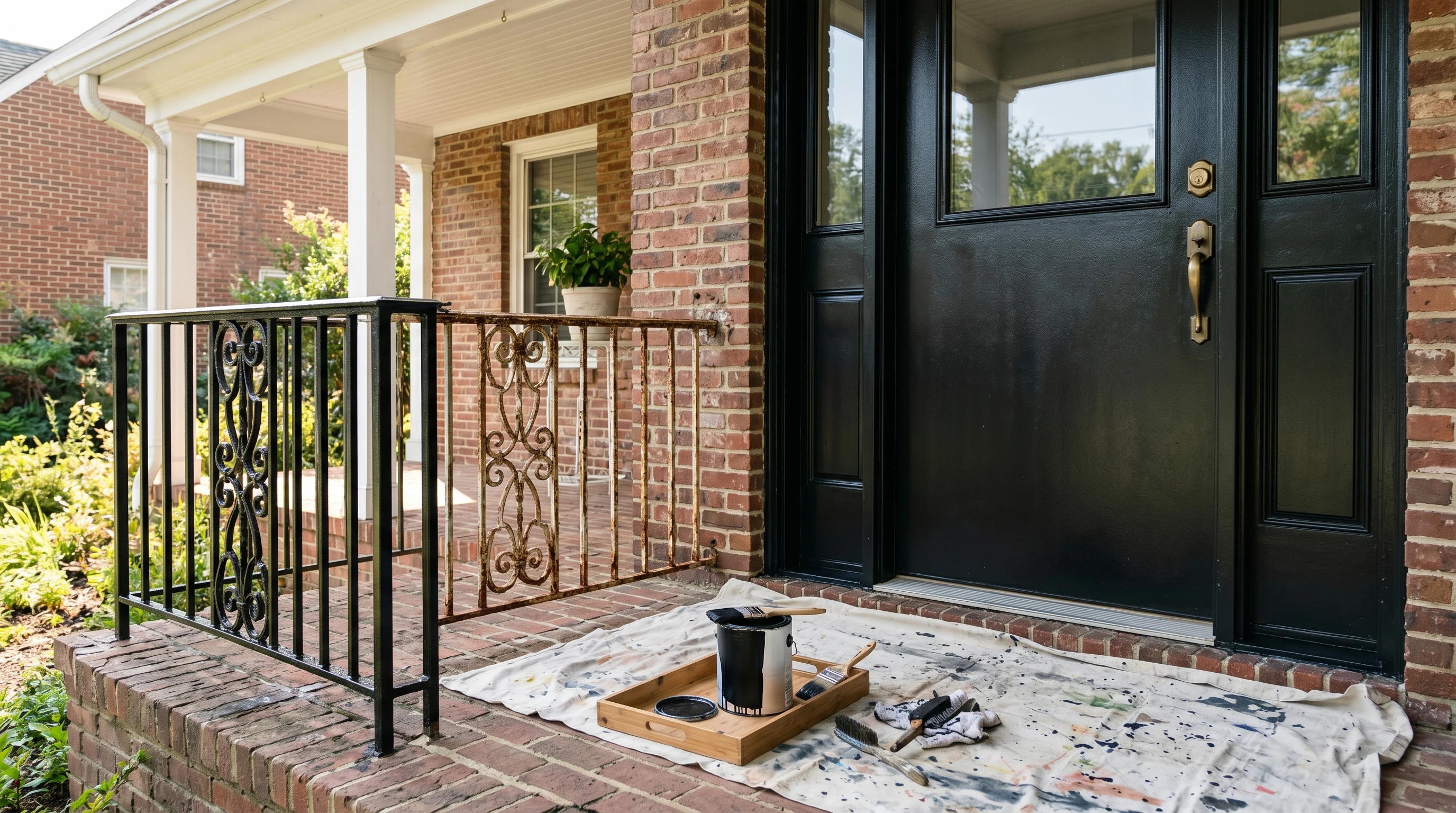
Metal isn’t one substrate. Aluminum, galvanized, hot-rolled steel, and cast iron each take a different chemistry, and the can label rarely tells you which one yours is. I see this every spring on iron railings — homeowner buys a quart of “metal paint,” skips the prep, slaps it on the rust, and calls me in two years when it’s flaking off in sheets.
TL;DR
- Identify first: aluminum, galvanized, hot-rolled steel, or cast iron. Each takes a different primer.
- Degrease: mineral spirits on oily steel, TSP on chalky aluminum, dish soap on galvanized
- Mechanical prep: 220 scuff on sound paint; wire-wheel rust and loose paint on steel; do not grind through zinc on galvanized
- Rust treatment: Krud Kutter Rust Converter or Rust-Oleum Rust Reformer on pitted steel only
- Primer: DTM rust-inhibitive (Rust-Oleum Stops Rust) on steel; bonding DTM (SW DTM, INSL-X Aqua-Lock) on aluminum; zinc-tolerant etch (Pro-Cryl or Rust-Oleum Galvanized Metal Primer) on fresh galvanized
- Topcoat: 100% acrylic exterior for residential, oil-based industrial enamel for cast iron and hot-rolled steel outdoors
- Cure: 24 hours to handle, 48 to re-mount hardware, 7 days for full hardness
- Skill: medium. Wrong primer is the failure mode.
Identify the metal first
Before you buy anything, figure out what you’ve got. Wrong primer beats no primer for failure speed.
Aluminum. Light, doesn’t rust. Oxidizes to a chalky white powder instead. Magnet won’t stick. Common on storm doors, screen doors, gutters, modern railings, mailboxes, fence pickets on aluminum-fence systems. Doesn’t need a rust-inhibitive primer. Needs a bonding primer that grabs the slick anodized or mill-finish surface.
Galvanized steel. Steel dipped in molten zinc. The zinc is what you’re painting, not the steel underneath. Magnet sticks. Surface looks dull silver with a faint crystalline pattern (the “spangle”). Common on chain-link fence frames, garage doors, mailbox posts, exterior conduit, HVAC housings, sheet-metal flashing. Fresh galvanized is the trickiest substrate on this list. Old weathered galvanized takes paint easier.
Hot-rolled steel. Plain mild steel with a black mill scale finish from the rolling process. Magnet sticks hard. Rusts fast if it’s outdoors and uncoated. Common on wrought-iron-style railings, gates, fence posts, fabricated exterior brackets, bench frames. Most “wrought iron” sold today is actually hot-rolled steel, not real wrought iron. Same prep either way.
Cast iron. Heavy. Magnet sticks. Rough porous surface, sometimes with visible casting flash. Common on antique gates, vintage radiators, decorative railings, ornamental pieces. Holds rust deep in the pores; the surface you see is rarely the surface you’ll be painting once you wire-wheel it.
If you can’t tell, do the magnet and weight test. A railing that weighs a ton and the magnet grabs is steel or iron. Light and the magnet slides off, aluminum. Magnet sticks but the surface is dull silver, galvanized.
Why metal is different from drywall
Three things. Adhesion, rust, and movement.
Adhesion: metal has no porosity for paint to mechanically grip. Bond is chemical only, which means the wrong primer doesn’t bond at all. You can scrape a failed metal job off in continuous sheets like wallpaper. Wood failures are localized; metal failures are catastrophic.
Rust: ferrous metals (steel, iron) corrode under any moisture and the corrosion expands. A pinhole in your topcoat lets water reach the steel, the steel rusts, the rust pushes the surrounding paint up, and the failure spreads outward from the original pinhole. Two years from a single chip to a peeling square foot.
Movement: metal expands and contracts more than wood under temperature swings. A south-facing steel door in summer runs 140°F surface temperature; in January it’s 20°F. The film has to move with it. Brittle paint cracks at every cycle.
Step 1: Clean and degrease
Every metal substrate starts here. Skip it and the rest doesn’t matter.
Hot-rolled steel and cast iron. Mineral spirits on a clean white rag. Wipe everything. Mill scale comes from the factory with a rust-preventive oil on it; old hardware has years of WD-40 and finger grease. Oil under primer means the primer floats on top of the oil and lets go six months later.
Aluminum. TSP substitute (Krud Kutter Original is fine) at label dilution, scrub with a soft brush, rinse. Old aluminum chalks heavily, and the chalk acts like dust under your primer. Wipe with a dark rag after. If it comes back white, scrub again.
Galvanized. Plain dish soap and water with a Scotch-Brite pad. Knocks off the white storage stain that hot-dip galv picks up from being stacked outdoors. Don’t use mineral spirits here; you’ll smear the residue around.
Let everything dry an hour before the next step. Water trapped under primer is as bad as oil.
Step 2: Mechanical prep
This is where the four substrates split.
Sound old painted metal. 220-grit scuff over the whole piece. Just break the gloss. You’re giving the new primer something to bite into, not removing material. Wipe with a tack cloth.
Hot-rolled steel and cast iron with surface rust. Drill-mounted wire wheel or angle grinder with a flap disc. Take it back to bright metal anywhere the rust is loose or flaking. Tight pitted rust that won’t budge — leave it for the converter in step three. Wear safety glasses; wire wheels throw bristles.
Galvanized. 220 scuff only. Do not grind, do not wire-wheel, do not sandblast. You’ll cut through the zinc layer and expose bare steel underneath, which then rusts under your paint. The zinc is the corrosion protection; respect it.
Aluminum. 220 scuff on weathered or chalky aluminum. Mill-finish (shiny) aluminum can take a Scotch-Brite scuff instead. Don’t go below 180-grit; deep scratches show through gloss topcoats.
Vacuum or blow off the dust. Tack cloth the surface.
Step 3: Rust treatment
Steel and iron only. Aluminum doesn’t rust. Galvanized doesn’t rust until the zinc’s gone, and if it’s gone you’ve got a different problem.
Pitted rust that didn’t come off with the wire wheel gets a rust converter. Krud Kutter The Must for Rust or Rust-Oleum Rust Reformer. Both are phosphoric-acid-based products that turn red iron oxide into a stable black ferric phosphate film you can prime over. Brush it on, let it dwell per the label (usually 20–30 minutes), watch the rust turn black. Recoat once if patches are still red.
Don’t use rust converter as a primer. It isn’t one. Prime over it within 24 hours per the manufacturer’s instructions.
The trap: rust converter on aluminum or galvanized does nothing useful and the residue can interfere with primer adhesion. If you don’t have rust, skip the step. The product isn’t a universal “metal prep.”
Step 4: Prime
Match the primer to the metal. This is the failure-mode step.
Hot-rolled steel and cast iron. Rust-Oleum Stops Rust (the oil-based version, not the water-based) is the workhorse. Brushable, available at every hardware store, blocks flash rust under the topcoat. Sherwin-Williams Kem Kromik Universal Metal Primer is the pro-store equivalent. For interior cast iron (radiators, decorative pieces) Rust-Oleum’s high-heat version handles temperature swings.
Aluminum and previously-painted exterior metal. Sherwin-Williams DTM Bonding Primer or INSL-X Aqua-Lock are waterborne acrylics formulated to grab non-porous substrates. Rust-Oleum Stops Rust will work on aluminum but it’s overkill. There’s no rust to inhibit, and the water-based DTMs clean up easier and recoat faster.
Fresh hot-dip galvanized. This is the one most homeowners get wrong. Standard primer fails on fresh zinc inside a year — the zinc is too slick and slightly reactive. Two paths: weather it outside for six months and let the zinc oxidize, then prime as if it were aluminum. Or skip the wait and use a zinc-tolerant etch primer designed for galvanized. Sherwin-Williams Pro Industrial Pro-Cryl Universal Primer is the pro spec. Rust-Oleum Galvanized Metal Primer is the Home Depot version. Both bond on fresh zinc and accept any normal topcoat.
One coat of primer is enough on sound prep. Welds, corners, and any pitted steel get a spot second coat in those areas only. Cure to recoat per the can, usually 4 hours water-based, overnight for oil.
Step 5: Topcoat
Two coats. Always two. The first coat is bond; the second coat is film.
Residential exterior railings, gates, fences, garage doors, steel front doors. 100% acrylic exterior. Benjamin Moore Aura Exterior, Sherwin-Williams Duration, or Behr Marquee Exterior. All three carry enough binder for UV and seasonal movement. Semi-gloss or gloss sheen on metal — flat sheens chalk fast outdoors, and the sheen is what sheds water. Kompozit’s exterior acrylic line is a value option for residential; see /best/exterior-paint for the full SKU comparison.
Cast iron and hot-rolled steel in industrial or marine settings. Oil-based alkyd enamel still wins. Rust-Oleum Stops Rust topcoat over Stops Rust primer is a system that holds up. Sherwin-Williams Industrial Enamel B54 is the pro version. Slower cure, stronger bond, harder film.
Decorative railings and gates. Hammerite hammered finish covers light surface imperfections without aggressive prep. The textured finish hides the pits in old wrought iron that would otherwise telegraph through smooth gloss. Solvent-based, fumes are real, ventilate.
Brush the railings with a 2-inch angled sash. Cut into the underside of every horizontal rail and feather the edge. Spray the gates with an HVLP or aerosol — pickets and scrolls have too many faces for a brush to reach without lap marks. Roll flat panels (steel doors, garage door panels) with a 1/4-inch nap mini-roller, finish with a brush.
Step 6: Dry and re-mount
Touch-dry in 1–2 hours for water-based, 6–8 for oil. Recoat at 4 hours water-based, 16 oil. Hardware stays off for 48 hours minimum on residential acrylic, 72 on oil enamel. Re-mount a doorknob into wet film and the gasket prints into the topcoat permanently.
Full cure runs 7 days. Don’t pressure-wash or scrub the new finish until then. A garage door that gets rained on at day three is fine; one that gets a stiff hose-and-brush is not.
Common mistakes
- Skipping degrease on hot-rolled steel. Mill-scale oil under primer floats the whole system. Wipe with mineral spirits. Always.
- Painting fresh galvanized without etching. The most common failure I see on chain-link gates and fresh garage door tracks. Either wait six months or use Pro-Cryl. Don’t slap house paint on day-one zinc.
- Rust converter on aluminum. Aluminum doesn’t rust. The chemistry doesn’t work and the residue fights your primer. Use it on iron only.
- Painting over loose, flaking rust. Wire-wheel it off first. The new coat is only as solid as the rust underneath.
- Re-mounting hardware too early. 48 hours minimum. Gasket prints into the film and the hinge swings off it permanently.
- Brush-only on a wrought-iron gate. Lap marks at every picket. Spray pickets, brush flat rails.
- Dark colors on south-facing steel doors with thin-film paint. Cheap exterior paint over dark color on a sun-blasted door can hit 160°F surface and the binder breaks down inside two summers. Use Aura, Duration, or Marquee, not contractor-grade.
Failure modes to watch for
- Rust bleed-through. Brown haloes ghost up through a white or light topcoat. Cause: rust under the primer that didn’t get wire-wheeled or converted. Fix: scrape down to bright metal, redo primer, recoat.
- Peeling at welds and joints. Water collects in the heat-affected zone around welds and at horizontal rail joints. Spot-prime welds with an extra coat during the prime step.
- Chalking on galvanized. White powder on a year-old paint job means the zinc was never etched and the bond is failing chemically. Strip the failed coat, etch-prime, recoat.
- Sun fading on dark colors. Black and dark blue garage doors fade fastest. Specifying a UV-rated topcoat (Aura, Duration, Marquee) gets you 8–12 years before visible fade. Cheap exterior on a south-facing door fades in three.
Maintenance and longevity
A properly primed and topcoated residential railing or steel door lasts 8–12 years exterior, longer if it’s interior or in a covered porch. Wash annually with a soft brush and dish soap. Touch up chips the season they show — a chip the size of a dime becomes a peeling square foot in two winters if water gets under the film. Keep a small bottle of the topcoat color labeled in the garage for spot repair.
Galvanized that was etched and topcoated holds up indefinitely. Galvanized that was painted without etching peels in 18–24 months no matter what’s on top.
If you have a steel front door on a south face and you’re picking one product to buy, start with Rust-Oleum Stops Rust primer and Benjamin Moore Aura Exterior in semi-gloss. That system holds up, brushes easy, and won’t bite you in two years.