Best Sandpaper for 2026: 5 We Actually Use
Five sandpapers tested across stripping, between-coat scuffing, and wet-sanding finish work. Top pick: 3M Pro Grade Precision — and where each one falls short.

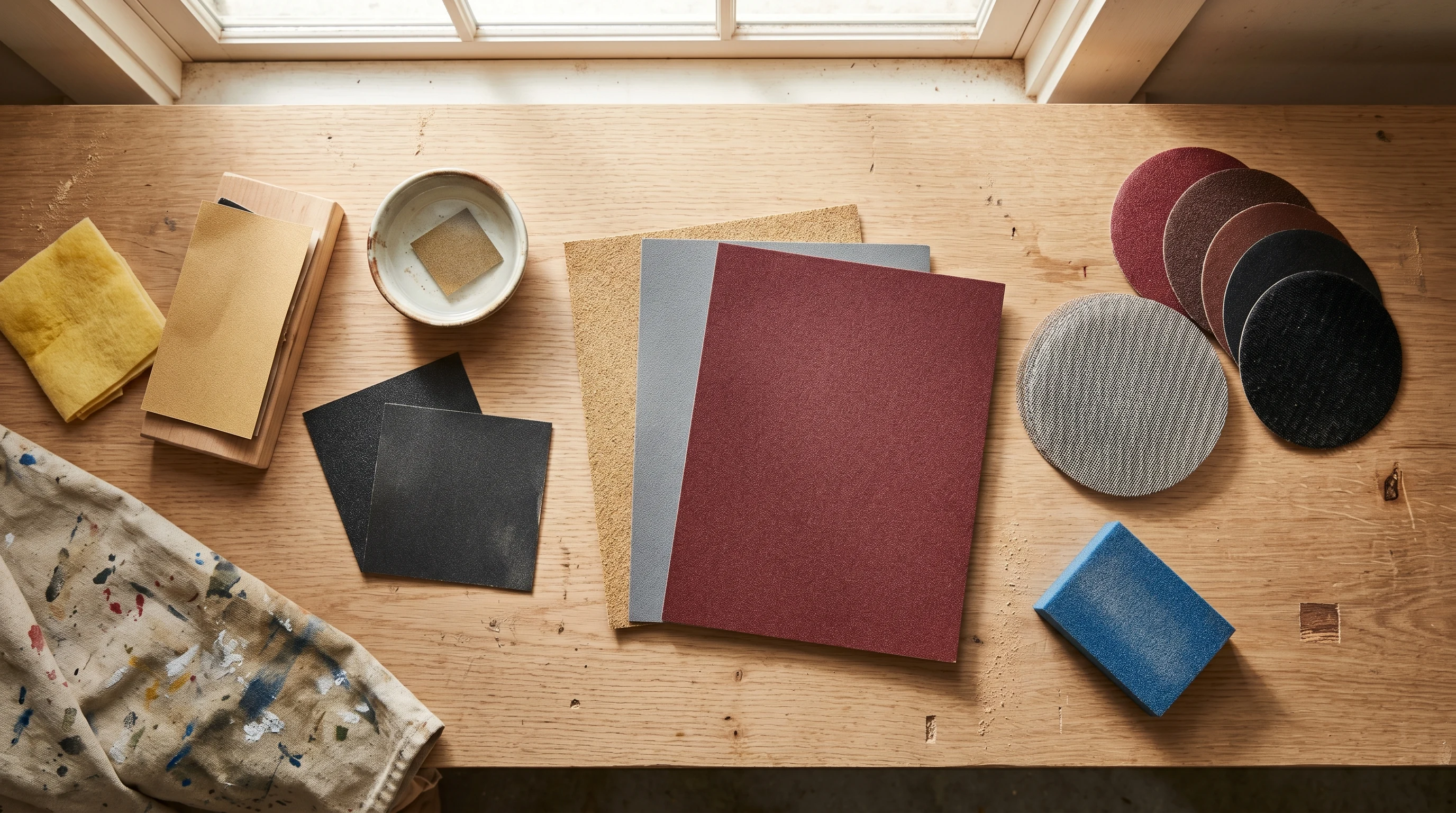
Disclosure: Some links below are affiliate links. We earn a commission if you buy through them, at no extra cost to you.
Top pick: 3M Pro Grade Precision Multi-Pack. About $20 for a six-grit box that covers a complete strip-to-prime workflow on most household jobs, with a Cubitron II ceramic-aluminum-oxide blend that cuts roughly 30% faster than plain aluminum oxide and stays sharp through twice the work area before glazing. It wins on cut speed, durability per sheet, and the no-slip backing that actually grips a block. It falls short on power-sander discs (no hook-and-loop in the multi-pack) and on premium price per sheet. For cabinet refinish at 320–400, Diablo SandNet’s open mesh doesn’t load up the way coated paper does. For curves and profiles, the 3M Pro Grade Precision Sanding Sponge bends around bullnose and ogee where flat paper gouges. For 5-inch random-orbit sanders, Diablo’s variety pack of ceramic-blend discs gives you 60 through 220 in one box. For wet-sanding clear coat between flow coats, 3M Wetordry silicon-carbide is the only paper here that won’t disintegrate in water.
There is no single right sandpaper.
Most homeowners do fine with three: the 3M Pro Grade Precision Multi-Pack for almost everything, a fine sanding sponge for trim profiles, and a small pack of Wetordry 600/1000/1500 for the rare finish-grade job.
The shortlist and why these five
We bought five sandpapers off the shelf, the same channels a homeowner would use, and ran them through three real projects across six weeks: a 14-foot weathered cedar porch rail stripped to bare wood, ten primed-MDF cabinet doors prepped for a Benjamin Moore Advance topcoat, and a refinished oak end table wet-sanded between flow coats of clear acrylic. The 3M Pro Grade Precision Multi-Pack and 3M Wetordry we already had multi-year experience with. The Diablo SandNet, Diablo discs, and 3M sanding sponge we ran fresh against them.
Five axes, weighted: cut speed against a reference 4 x 4 inch panel, square-feet-per-sheet before glazing, loading on cured Advance at five, fifteen, and thirty minutes, hook-and-loop life on the 5-inch random-orbit, and shape retention on profiles for the sponge.
We asked four working contractors and one cabinet refinisher which sandpaper they keep on the truck. Three said 3M Cubitron-line for general work. Two said Diablo SandNet for cured paint and primer. None recommended store-brand garnet paper. That set our floor.
What sandpaper is actually doing
Sandpaper does one job: scratch the surface uniformly so the next thing — paint, primer, the next-finer grit — bonds or sits flat. Three failure modes get in the way.
Skipping grits leaves deep scratches. Sandpaper grits step down a ladder: each grit removes the scratches the grit before it left, no more. Going from 80 directly to 220 means the 80-grit gouges are still there under whatever you painted on top, visible under raking light. Climb the ladder. 80 to 100 to 120 to 150 to 180 to 220 sounds like work, but each step is fast because each grit only has to erase the one before it.
The wrong abrasive on the wrong surface burnishes instead of cutting. Aluminum oxide is friable — the grain fractures as it wears, exposing fresh edges. Silicon carbide is harder and sharper but doesn’t self-sharpen, so dry-sanding with it on softwood mostly burnishes the wood fibers shut. Ceramic blends are heat-stable and built for cured enamel and metal where aluminum oxide glazes over. Match the abrasive to the material.
No backing means uneven pressure. Sand by bare hand and the contour of your palm follows the surface; corners get rounded, low spots stay low. A cork or rubber sanding block holds the paper flat. For wet-sanding, a hard rubber block under the Wetordry sheet is the difference between a flat finish and a wavy one. The block is two dollars and saves more flat surfaces than any other shop tool.
A good sandpaper plus a block plus the right grit ladder solves all three. A glazed cheap sheet on bare hand pressure fails all three at once.
Grit by job, the table that ends arguments
| Grit | Job | Notes |
|---|---|---|
| 40–60 | Heavy stripping, removing thick paint, leveling cupped boards | Tear out, not finesse — coarse leaves deep gouges that the next four grits exist to erase |
| 80 | Stripping cured paint to bare wood, levelling rough lumber | The standard starting point for refinish work |
| 100–120 | Levelling repairs, removing 80-grit scratches, smoothing rough sawn | Bridge between aggressive and prep |
| 150 | Pre-prime on raw wood; final pass before primer | Where most “ready for primer” surfaces should land |
| 180–220 | Between coats of latex, primer, or sealer; final on softwood before stain | Scuff sand, not strip — light pressure only |
| 320–400 | Pre-final on furniture before topcoat; between coats of enamel | Diablo SandNet’s sweet spot |
| 600 | First wet-sand between clear coats | Switch to silicon carbide and water here |
| 800–1500 | Step-down wet-sanding for satin-to-gloss progression | Backing block mandatory |
| 2000+ | Pre-polish for mirror finish on automotive or fine-furniture | Specialty; most household projects stop at 1500 |
The rule for skipping: never skip more than one grade. 80 to 120 is fine. 80 to 150 is pushing it. 80 to 220 leaves swirl marks you’ll see under any raking light.
Abrasive types, in plain English
Aluminum oxide. The default. Friable grain — the crystals fracture under pressure and expose fresh sharp edges as the paper wears, so a sheet stays cutting longer than its surface area would suggest. Right for wood, drywall mud, joint compound, cured latex paint, body filler. Roughly 80% of the sandpaper sold for household work is aluminum oxide on a paper backing. It’s the cheap, reliable, do-everything abrasive.
Silicon carbide. Harder and sharper than aluminum oxide. Doesn’t self-sharpen — once a grain wears, it stays dull. Designed for wet-sanding cured finishes (clear coat, automotive paint, gloss enamel), glass, stone, and metal. The waterproof black paper you see for wet-or-dry is almost always silicon carbide. Useless dry on wood — it skips and burnishes instead of cutting.
Ceramic and ceramic blends. Engineered abrasives. The grain is harder than aluminum oxide, runs cooler under pressure, and is friable in a controlled way (3M’s Cubitron II uses precision-shaped triangular grains that fracture along designed lines). Cuts faster, lasts longer, costs more. The premium pays off on cured enamel, hardwood, metal, and any job big enough that sheets-per-hour matters more than sheets-per-dollar. Wrong choice for a single screen-door touchup.
Garnet. The orange-red paper your grandfather used. Soft natural grain that wears quickly and leaves a slightly burnished surface furniture refinishers sometimes prefer for the patina. Cheap, slow, narrow use case. Skip unless you’re hand-finishing antiques.
The shorthand: aluminum oxide for general work, silicon carbide for wet, ceramic for cured paint and metal where you’ll otherwise burn through three sheets.
Format: sheet, sponge, or disc
Each format wins a category. Mixing them up makes more work.
Paper sheets. The everything format. Cut to size, wrap around a sanding block, hand-sand. Best on flat surfaces — drywall patches, cabinet faces, table tops, porch boards, any plane you can hold a block flat against. Loads up faster than mesh on cured paint and primer; cleans with a few taps against the bench. The 3M Pro Grade Precision multi-pack is the right form for 70% of household sanding.
Mesh sheets. Open weave that lets dust pass through instead of trapping it. The grain stays cutting two to three times longer than coated paper at the same grit on cured paint and primer. Hook-and-loop backed; works on a sanding block or palm sander. Diablo SandNet is the standout. The trade is price per sheet (about double paper) and that the open weave is too aggressive on softwood end grain.
Sanding sponges. Foam-core blocks with abrasive on one or two faces. They flex around bullnose, ogee, and mullion profiles where a flat sheet skips and gouges. Wrong tool for flat surfaces because the foam compresses unevenly under hand pressure and follows the surface instead of leveling it. Right tool for trim profiles, between-coat scuff on curved furniture, and tight inside corners over 1/4” radius.
Hook-and-loop discs (5-inch). The format for random-orbit power sanders. Swap grits in seconds, reuse partially used discs by pulling them off and putting them back on later. Diablo’s variety pack covers a full prep ladder in one box. Loops on the sander pad outlast the discs by a wide margin; once the disc itself spins on the pad, the loops on that disc are dead but the pad is fine.
PSA discs. Sticky-back, one-pull-and-done. Cheaper per disc, used on dedicated production work where one sander runs one grit all day. Wrong for varied homeowner projects.
Wet-or-dry paper. Black-backed silicon carbide on waterproof paper. The only sandpaper that survives extended water exposure. Use a backing block, water with a drop of dish soap, and the right grit ladder (600, 1000, 1500 for most clear-coat work). Freehand wet-sanding without a block is the fastest way to dig a low spot in a finish you spent three days building.
Comparison at a glance
| Product | Format | Abrasive | Best for | Grit range | Price tier |
|---|---|---|---|---|---|
| 3M Pro Grade Precision Multi-Pack | Paper sheet | Cubitron II ceramic / Al-oxide | All-purpose strip to prime | 60–220 | $$ |
| Diablo SandNet | Mesh sheet | Ceramic | Cabinet and enamel prep, fine grits | 80–400 | $$ |
| 3M Pro Grade Precision Sanding Sponge | Foam sponge | Aluminum oxide | Curves, profiles, trim | Fine + Medium | $ |
| Diablo 5” Sanding Discs Variety Pack | H&L disc | Ceramic blend | 5-inch random-orbit power sanding | 60–220 | $$ |
| 3M Wetordry | Paper, waterproof | Silicon carbide | Wet-sand between clear coats | 400–2500 | $ |
1. 3M Pro Grade Precision Multi-Pack, top pick
The Pro Grade Precision is the sandpaper you reach for first on any general-purpose job and the box that earns its premium price on cut speed and life-per-sheet. The Cubitron II abrasive is a precision-shaped ceramic-aluminum-oxide blend; under pressure the triangular grains fracture along designed lines instead of randomly, which keeps fresh edges exposed as the paper wears. On the cedar porch rail, an 80-grit sheet took roughly 30% less time than a generic aluminum-oxide 80 to bring a 4 x 4 foot section to uniform bare wood, and the 3M sheet was still cutting when the generic sheet had glazed.
The No-Slip Grip backing matters more than it sounds. Wrapped around a cork sanding block, the paper stays put under hand pressure instead of walking out from under your stroke. The cheap red garnet you bought once and threw away — that paper walked because the backing has nothing to grip. The Cubitron-line 3M paper grips a block and grips the surface.
Multi-pack covers 60, 80, 100, 120, 150, and 220 in one box. That’s the full ladder for most strip-to-prime jobs in a single purchase, no second trip when you discover you needed a 120 in the middle of the sequence. Counterfeit listings show up on Amazon — if the per-sheet price looks half what Home Depot charges, it’s not real 3M. Buy from a stocked retailer or check the printed end label.
Sheets only. For 5-inch random-orbit power sanders, you want hook-and-loop, which means the Diablo discs (or the separate 3M Cubitron hook-and-loop line) instead.
| Spec | Value |
|---|---|
| Format | 9” x 11” paper sheets |
| Abrasive | Cubitron II (ceramic / aluminum oxide blend), friable |
| Grits in pack | 60, 80, 100, 120, 150, 220 |
| Best for | Stripping, levelling, prep on wood and cured paint |
| Approx. price | $18–$22 per multi-pack |
Buy it if: you want one box that covers most household sanding from strip to prep. Skip it if: you’re running a power sander (you need hook-and-loop discs) or you’re wet-sanding clear coat (you need silicon-carbide Wetordry).
2. Diablo SandNet, best for cabinet refinish (320–400 fine)
Once you switch to fine-grit work on cured paint or primer — between-coat scuff on cabinet doors, pre-final on enamel trim — coated paper starts losing the fight against loading. Cured paint dust packs into the spaces between the grains, the paper glazes over, and you find yourself reaching for a fresh sheet every two doors. Diablo SandNet flips this: open mesh weave with no spaces to clog. On a stack of ten primed MDF cabinet doors prepped at 320 grit for an Advance topcoat, one SandNet sheet handled the whole set without glazing. A coated paper at the same grit needed three sheets to do the same work.
The mesh is hook-and-loop backed; you can stick it to a flat sanding block by hand or to any 5-inch palm sander. With dust extraction the through-mesh dust path is the cleanest powered sanding we’ve done indoors.
Trade is twofold. Price per sheet is roughly double a paper sheet at the same grit, though the doubled life makes the math even or better in practice. And the open mesh is too aggressive for softwood end grain on raw fir or pine; the weave catches and tears fibers where a flat coated paper would smooth. For cured paint and primer, mesh wins. For raw softwood, switch to paper.
Coarse grits under 120 tear at the corners on heavy stripping work. This is a fine-and-finer mesh. Strip with the 3M Pro Grade Precision paper, prep and finish with the Diablo SandNet.
Buy it if: you’re refinishing cabinets or trim and you want one sheet to last a full set of doors. About $1.50–$2 per sheet, sold in 4-1/2 x 5-1/2 inch packs.
3. 3M Pro Grade Precision Sanding Sponge, best for curves and profiles
Flat paper on a curved profile is the fastest way to make flats on a curve. Bullnose corners get a hint of bevel, ogee trim loses its top fillet, mullions get gouged where the paper folds at an inside angle. The 3M sanding sponge is a foam-core block with aluminum-oxide grit on the two long faces, fine on one, medium on the other. The foam flexes with the profile under hand pressure; the abrasive face follows the curve instead of fighting it.
We ran one through a set of crown-and-base trim profiles and four cabinet drawers with bullnose fronts. The sponge stayed cutting through about six feet of trim per face before the corners rounded off. Rinse under tap water, let it dry, the abrasive comes back for another pass. Foam sponges are consumables — call it a few weekends of project work per sponge — but at $4 a sponge the math is fine.
Wrong tool for flat surfaces. The foam compresses under pressure and follows whatever wave is already in the surface, which is the opposite of what you want when you’re trying to level a panel. Use a paper-and-block on flats, sponge on profiles, and don’t switch them.
Awkward on inside corners under 1/4” radius. The sponge is too thick to reach into a tight inside corner; fold a sheet of 220 paper into quarters and use the folded edge instead.
Buy it if: you’re sanding any trim profile, drawer front, or curved furniture and a flat sheet would gouge it. About $4 per sponge.
4. Diablo 5” Sanding Disc Variety Pack, best for orbital sanders
The disc you put on a 5-inch random-orbit sander when you’re prepping ten cabinet doors, a dining table, or a deck. Diablo’s ceramic-blend grain stays sharp through about twice the square footage of generic aluminum-oxide discs at the same grit on poplar and birch — same math as the 3M Pro Grade paper, applied to the disc format. The variety pack covers 60 through 220 in one box.
Eight-hole pattern matches most major 5-inch random-orbit sanders for through-disc dust extraction. With a vacuum hooked up, the sanding floor stays clear and the disc doesn’t load up with its own dust the way a closed-back disc does.
Hook-and-loop loops wear out around disc 8 to 10 of heavy use. The disc starts spinning on the pad before the grit is gone, which means you’ve got grit left on a disc you can’t use anymore. Annoying, not job-breaking. The sander pad itself is fine; replacement discs are cheap, replacement pads cost twenty dollars and last a year of weekend use.
Coarser grits under 120 clog faster on softwood resin — pine and fir gum up a 60 disc inside ten minutes. Clean with a crepe rubber stick between passes, or jump up to 80 to start.
Verdict: the disc pack you buy when you’ve got a power sander and a project longer than an afternoon. About $20–$25 per variety pack.
5. 3M Wetordry, best for between-coats wet sanding
Different category. Wet-sanding cured clear coat or acrylic enamel between flow coats is the path to a near-mirror finish, and the only sandpaper that survives the process is silicon-carbide grit on waterproof paper. The 3M Wetordry is the standard. Black backing, silicon-carbide grit, sheet sizes from 400 to 2500.
On the oak end table wet-sanded between flow coats of clear acrylic — 600 first pass, then 1000, then 1500 — the Wetordry sheets cut cleanly without loading and held up through the full sequence on one sheet per grit. The slurry rinsed off under the tap; the paper went back to work. A no-name wet-or-dry I tested as a control disintegrated at the second grit pass and cost an hour to dig the loose grit out of the wet slurry.
Useless dry. Silicon carbide on a hard backing with no water skips on bare wood and burnishes cured paint without cutting it. Wet-or-dry only works wet, which means a backing block (mandatory — freehand wet-sanding makes low spots), water with a drop of dish soap, and a microfiber to wipe the slurry between passes.
Buy it if: you’re chasing a finish-grade or near-mirror surface on a tabletop, cabinet front, or refinished door. About $1 per 9 x 11 sheet.
Sandpapers we tried and dropped
- Generic red garnet, $5 for 25 sheets. Burnishes more than it cuts on cured paint; backing slides on a sanding block. The savings disappear in three sheets per the work one Cubitron sheet does.
- Foam-backed sanding blocks (drywall-aisle). Fine for drywall mud only — the foam is too soft to level anything else. Use the 3M Pro Grade Precision sponge instead.
- Cheap PSA disc rolls, $10 per 50. PSA backing is a dead-end for varied homeowner work. The Diablo hook-and-loop variety pack costs more per disc and saves five times the discs in the variety of jobs you’ll actually use them on.
- 3M assorted-grit packs sold in big-box endcaps. Aluminum-oxide-only, no Cubitron. Acceptable budget option but the grit ladder is incomplete (skips 100 or 150 in some packs); buy the Pro Grade Precision multi-pack instead.
- Steel wool, 0000. Different category — burnishes between coats, doesn’t sand. Useful in its place, not a sandpaper substitute.
Common mistakes
- Skipping grits. Going 60 to 220 leaves swirl marks the 220 cannot erase. Every grade you skip is scratches you’ll see under raking light. Climb the ladder one step at a time.
- Using too coarse for the job. 180 grit on cured paint scratches through the topcoat to the primer. Match the grit to the hardness and condition of the surface — coarse for stripping, fine for prep, finer still for finish.
- Wet-sanding without a backing pad. Bare hand pressure follows the surface and digs low spots. Use a hard rubber or cork block under the Wetordry sheet, every time.
- Buying cheap discs that lose grit on the third use. A $10 pack of generic discs at 50 discs is $0.20 per disc. A $20 Diablo pack at 30 discs is $0.67 per disc. The Diablo discs do roughly three times the work per disc on cured paint, so the real cost-per-square-foot is half. The cheap discs are not cheap.
- Sanding past glazing. When the paper stops cutting and starts shining the surface, it’s burnishing — closing the surface so paint won’t bond. Toss the glazed sheet, grab fresh paper.
- Hand-sanding edges without a block. Bare hand pressure rocks over corners and rounds them. A two-dollar cork block keeps edges sharp.
- Mixing dry-only paper with water. Coated paper without waterproof backing falls apart in five minutes of slurry. Use silicon-carbide Wetordry for any wet work.
A starter kit that earns its keep
For a homeowner doing a couple of weekend projects a year: 3M Pro Grade Precision Multi-Pack ($20), 3M Pro Grade Precision sanding sponge in fine/medium ($4), a small pack of 3M Wetordry 600/1000/1500 ($8), a cork sanding block ($3), a tack cloth ($2). About $37.
For a homeowner with a 5-inch random-orbit sander: add the Diablo Sanding Disc Variety Pack ($23). About $60 total.
For cabinet refinish work: add a pack of Diablo SandNet 320 ($12). About $50 total without the power sander, $73 with.
A multi-pack covers more ground than most homeowners realize. One box of Pro Grade Precision handles a stripped porch rail, a primed cabinet face, and the prep on a refinished tabletop with sheets to spare. Buy the right grit for the job. Climb the ladder, don’t jump. Don’t skip the block.
FAQ
What grit do I use for what? Stripping bare wood: 60–80. Levelling repairs: 100–120. Pre-prime: 150. Between coats: 180–220. Pre-final on furniture: 320–400. Wet-sanding clear coat: 600 and up. Never skip more than one grade — 80 to 120 is fine, 80 to 220 leaves swirl marks.
Aluminum oxide, silicon carbide, or ceramic? Aluminum oxide for general wood and paint (friable, self-sharpening). Silicon carbide for wet-sanding cured finishes (harder, doesn’t self-sharpen). Ceramic for cured enamel and metal where heat kills aluminum oxide (cuts faster, lasts longer, costs more).
Sheet, sponge, or disc? Paper sheet on a block for flats. Sponge for curves and profiles. Hook-and-loop disc on a 5-inch random-orbit for production volume. Wet-or-dry silicon carbide for finish-grade clear coat.
Why are my edges round after sanding? Bare hand pressure follows the surface and rocks over corners. Use a cork or rubber sanding block to keep paper flat and pressure even.
Hook-and-loop or PSA discs? Hook-and-loop for varied homeowner work. PSA for dedicated single-grit production runs. Hook-and-loop discs are reusable across jobs; PSA is one-and-done.