How to Fix Efflorescence on a Concrete Floor (and Stop the Bloom Coming Back)
White powdery bloom on a concrete floor is salts pushed up by moisture. Diagnose the source, etch the slab, dampproof the surface, and recoat so the paint actually holds.

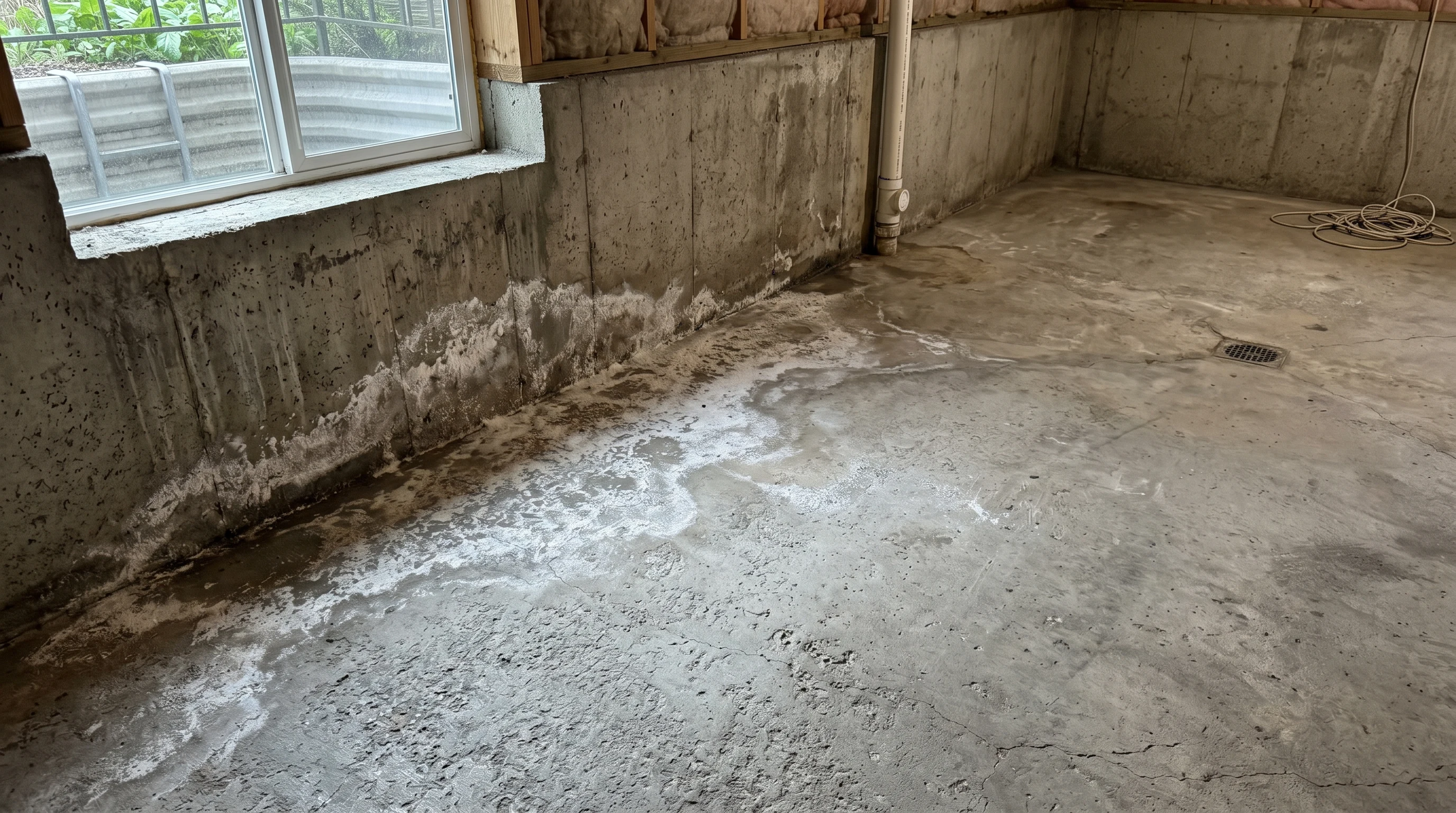
White powder on a concrete floor isn’t mold and it isn’t dead paint. It’s salts being pushed up by moisture moving through the slab. Until you stop the water and open the surface, nothing you roll on top will hold.
Does this match what you’re seeing?
Look at the powder before you treat it. The fix changes if you’ve misidentified the problem.
- Efflorescence: white or pale gray, chalky, dries to dust on your fingertip. Wipes off the slab clean. Often heaviest near the wall-floor joint, around floor drains, or where water pools.
- Mold or mildew: dark, slimy, fuzzy. Has a smell. Doesn’t dry to dust. See how to fix mold on walls instead.
- Concrete laitance: pale, weak surface layer left after a poor pour or finish. Not pushed up by moisture; it’s just been there since day one. Same fix (etch and prime) but no moisture diagnostic needed.
- Failing old floor paint: chips and flakes with curl. The film is what’s failing, not the substrate. See how to fix peeling paint.
If you can’t tell, mist a small patch with water. Efflorescence dissolves and re-blooms in a few days. Laitance wets and stays put. Old paint doesn’t change.
How serious is this?
Three tiers.
- Light bloom in a garage corner. Once a winter, dries up by April, no other symptoms. Etch, prime with a dampproof concrete sealer, recoat with a one-part epoxy or porch enamel. Same-weekend job.
- Moderate, recurring, multiple areas of the slab. Real moisture drive. Etch, run a plastic-sheet test, install a dampproof primer like Drylok Latex Concrete Floor Paint as the bond coat, two-part epoxy on top. Two-weekend job.
- Heavy bloom plus cracks plus damp drywall above the slab. Finished-basement vapor problem, not a paint problem. Stop. Get a basement waterproofing assessment before spending another dollar on paint.
Why this is happening (root cause)
Concrete is full of soluble alkaline salts left over from cement hydration: calcium hydroxide, sulfates, carbonates. They dissolve in any liquid water moving through the slab and crystallize at the surface as the water evaporates.
The water comes from one of three places. Hydrostatic pressure pushes groundwater up through a slab with no vapor barrier. Capillary wicking pulls moisture sideways through a slab in contact with damp soil. Vapor migration moves humid interior air toward the cold slab in winter and condenses there. On a slab-on-grade basement in zone 5 or colder, you get all three every February.
Paint on top of an active efflorescence cycle is doomed. The salts crystallize against the back of the film, break the bond, and the coating peels off in patches. I’ve watched homeowners scrape and recoat the same garage three times in three years before they admitted the gutter dumping water at the foundation was the actual problem.
Stop the water first. Etch second. Prime and paint third. Reverse any of those and you’re scheduling next year’s repaint.
The fix
Step 1. Find and stop the moisture source
Walk the exterior and the basement before you open any can.
- Downspouts dumping within 5 feet of the foundation. Add extensions to 6–10 feet, more if your soil is heavy clay.
- Grade. Soil should slope away from the house at 6 inches over the first 10 feet. Re-grade where it doesn’t.
- Gutters clogged or undersized. Clean twice a year.
- Sump pump. Cycle it manually. Replace if it’s short-cycling.
- Interior humidity. Over 60% RH in the basement during heating season is feeding the bloom. Run a dehumidifier at 50%, drained to a sump or floor drain.
- Vapor barrier under slab on grade. Pre-1980 Midwest builds usually don’t have one. You can’t retrofit underneath, but a vapor-blocking coating on top is the next-best move.
Don’t paint until the slab has been visibly dry for 48 hours.
Step 2. Mechanical removal
When the slab is dry, hit the bloom with a stiff nylon brush or a wire brush, then vacuum with a shop vac. Get the loose salts off the surface so the etch can reach the substrate.
Mask: an N95 minimum. Salts get airborne and you don’t want them in your lungs.
Step 3. Acid etch
Mix DRYLOK Etch (powder, mixes with water on site) per label, or use a phosphoric-acid masonry etch as a comparable. Pour or spray onto the slab, scrub with a stiff brush, dwell per label (usually 15–20 minutes), don’t let it dry on the surface.
PPE: chemical-splash goggles, neoprene or nitrile gloves, long sleeves, rubber boots. Cross-ventilate; etch off-gases as it reacts.
Muriatic (1 part to 10 parts water, always acid into water) etches harder. I avoid it indoors. The fumes strip a basement of usable air for an hour, and I’ve seen muriatic spatter pit a stainless laundry tub from across the room.
Step 4. Neutralize and rinse twice
Etch residue plus dissolved salts has to come off the slab or you’ve just redistributed the problem. Rinse with a hose or low-setting pressure washer. Mix 1 cup of baking soda per gallon of water, slosh it across, scrub, rinse again.
Two rinses minimum. Three if your label calls for it. Stop when a drop of fresh water no longer fizzes on the slab. Let dry 24–48 hours.
Step 5. Calcium chloride or plastic-sheet moisture test
Tape a 2-foot square of clear 6-mil plastic sheeting to the dry slab on all four edges. Leave 72 hours. Wet underside or a darkened slab patch means the slab is still passing moisture, and you need a dampproof primer in step 6, not a bare-substrate primer.
For a real number, a calcium chloride test kit (ASTM F1869) gives moisture vapor emission rate in pounds per 1,000 sq ft per 24 hours. Most one-part floor coatings cap at 3 lb; two-part epoxies at 5 lb; moisture-tolerant epoxies at 12 lb or higher. Match the coating to the reading.
Step 6. Apply a dampproof primer or sealer
This layer is doing the actual work.
- Drylok Latex Concrete Floor Paint as a one-step option for light-to-moderate vapor drive. Two coats, self-priming on etched concrete.
- Behr Premium Granite Grip as a textured base coat for a porch or patio where slip resistance matters.
- Sherwin-Williams H&C ConCrete Penetrating Sealer under a separate topcoat where you want maximum vapor blocking.
For garage floors with vehicle traffic, step up to a two-part epoxy primer like Rust-Oleum EpoxyShield Pro or Sherwin-Williams ArmorSeal 1000 HS. Mix only what you can roll in the pot life and respect the recoat window.
Step 7. Topcoat
Two coats, same family. Cut in the perimeter, roll the field while the cut-in is still wet, don’t stop mid-slab. Lap marks on a basement floor show up the second the overhead bulb is on.
Safety and chemical interactions
Never combine an acid masonry etch with bleach, ammonia, or hydrogen peroxide. Produces chlorine or other toxic gas. If you bleached mildew first, rinse thoroughly and dry before etching.
PPE: chemical goggles, nitrile or neoprene gloves, N95 during scrubbing, organic-vapor cartridge respirator if you’re using muriatic indoors. Cross-ventilate.
Common DIY mistakes
- Skipping the etch. Paint won’t bond to chalky salt residue. The slab might look clean after a vacuum pass, but the residual salt film breaks adhesion in 6 to 12 months.
- Painting over a wet slab. “Dry to the touch” isn’t dry. Run the plastic-sheet test or wait 48 hours of visibly dry conditions.
- Interior-grade primer on a slab that sees freeze-thaw. A garage in zone 5 hits 0°F and 70°F in the same week. Use a coating rated for freeze-thaw cycling.
- Too thick a first coat. Concrete coatings build through penetration on the first pass. Roll thin, let it bite, build mil thickness on coat two.
- Ignoring the wall-floor joint. That’s where moisture concentrates and bloom recurs. Etch it, prime it, seal it with polyurethane caulk before topcoating.
When to call a pro
- Efflorescence with visible cracking, plus damp drywall or staining on the wall above the slab. That’s a vapor-drive issue affecting the whole envelope, not just the floor.
- Slab-on-grade in a finished basement with no known vapor barrier and recurring bloom every season.
- Bloom returning within 90 days of a properly etched and primed coating system. The moisture source is unfixed and the diagnostic is beyond a homeowner’s tools.
- Pre-1978 home with cracking floor paint near the bloom — test for lead first.
- Suspected radon or known foundation drainage issues. The floor coating is the last problem to solve, not the first.
What’ll bite you in two years
Efflorescence is a moisture telegraph. The slab is telling you water is moving where you didn’t plan for it. Paint over the symptom without addressing the cause and the bloom comes back, possibly with a heave or a crack alongside it. I’ve watched homeowners repaint the same basement floor every other spring for five years before they finally regraded the side yard. Took an afternoon with a wheelbarrow. Bloom hasn’t been back since.