Latex vs Acrylic Paint: The Naming Confusion, the Chemistry, and Which to Buy
A chemist's read on the most-misused label in US paint. What 'latex' actually means, where pure acrylic earns its premium, and which resin class belongs on which wall.

The 30-second answer
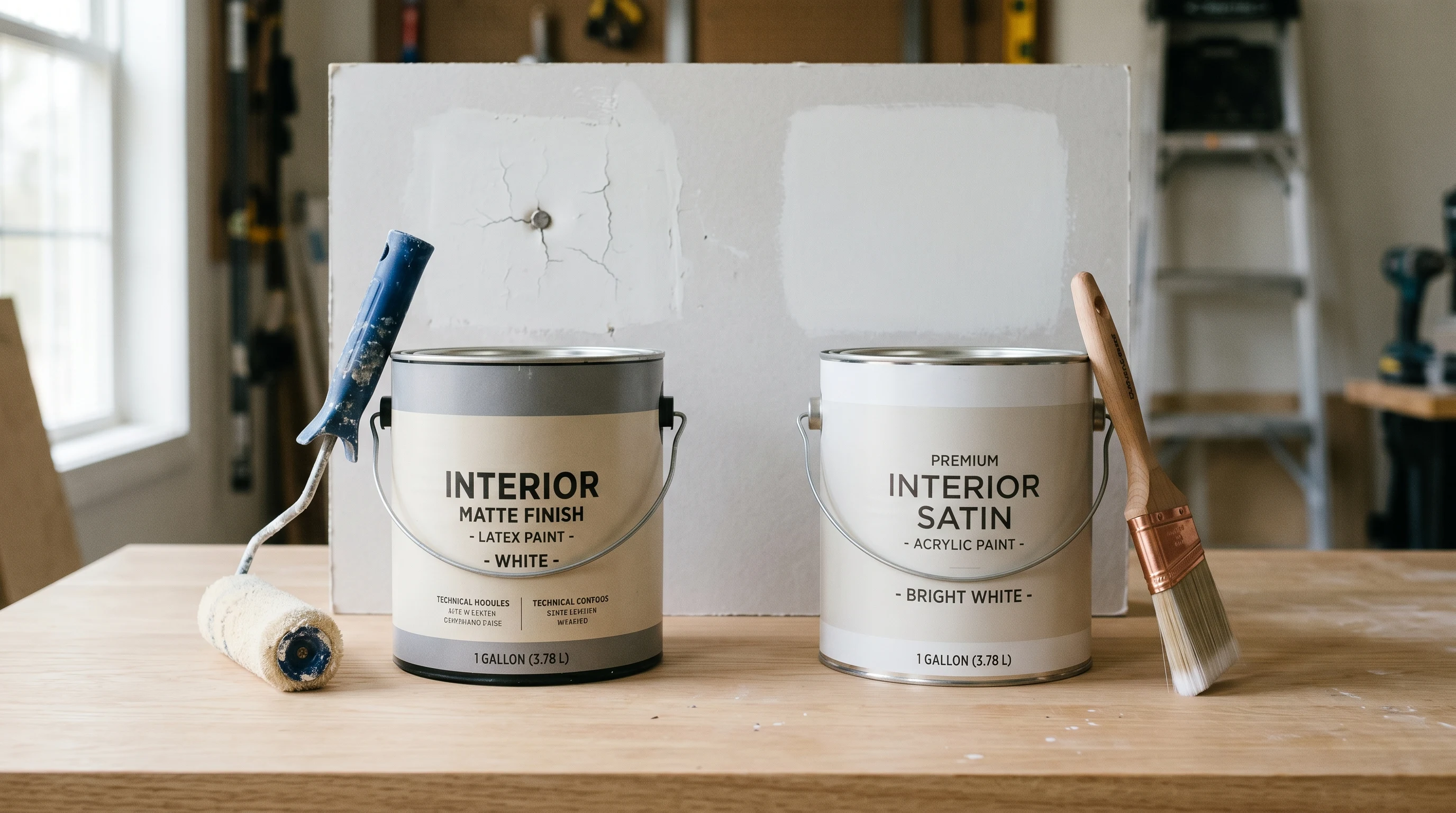
Most “latex” interior paint sold in the US is, chemically, an acrylic-latex. The two words point at the same can on the shelf about 70% of the time. The meaningful comparison isn’t latex vs acrylic. It’s vinyl-acrylic (cheaper binder, the old guard of contractor flat) vs 100% acrylic (the binder behind every premium can on the shelf in 2026). Vinyl-acrylic is fine for ceilings and low-traffic interiors. 100% acrylic earns its price on every exterior, in kitchens and baths, and anywhere the film has to flex through freeze-thaw or hold color under direct sun.
At a glance
| Vinyl-acrylic (“latex”) | 100% acrylic | |
|---|---|---|
| Common label phrasing | ”Latex,” “vinyl-acrylic,” “acrylic-latex” (mid-tier) | “100% acrylic,” “acrylic-latex” (premium) |
| Binder Tg (glass transition) | 5–15°C (stiffer film) | -10 to 5°C (more flexible) |
| Cured-film flexibility | Limited; cracks at substrate movement | High; tolerates expansion / contraction |
| UV / color retention | Chalks and dulls outdoors in 18–36 months | Holds color 5–10+ years exterior |
| Scrub cycles (ASTM D2486, satin) | 200–400 | 600–1000+ |
| Dry / recoat | 30–60 min / 2–4 h | 30–60 min / 1–4 h |
| Low-temp application floor | ~50°F (10°C) | ~35°F (2°C) for low-temp formulas |
| Price (gal, retail) | $20–$40 | $50–$110 |
| Where it belongs | Ceilings, builder-grade interior, low-traffic | Exterior, wet rooms, trim, premium interior |
How to tell what’s actually in the can
The front label says “latex.” That tells you the paint is water-based and nothing else. Flip to the back and read the data sheet, or pull the manufacturer’s TDS online. Three phrases to look for, in order of binder quality:
- “100% acrylic” or “100% acrylic-latex”: strict spec, full acrylic copolymer binder, premium tier.
- “Acrylic-latex” without the “100%” prefix: usually a blend with enough acrylic to claim the name. Read further.
- “Vinyl-acrylic” or “polyvinyl acetate (PVA)”: vinyl-acetate-based binder, sometimes copolymerized with a small acrylic fraction. Budget tier.
If the TDS is silent on resin class and the price is under $30/gal, assume vinyl-acrylic. Manufacturers don’t hide the binder when it’s the better one.
How the binders actually differ
The word “latex” is a fossil. It comes from natural-rubber latex emulsions used in mid-century paint, which haven’t been the binder in residential paint for fifty-plus years. Today every “latex” paint is a synthetic waterborne emulsion. The resin chemistry under that label is what determines how the paint behaves.
Vinyl-acrylic binders are built around polyvinyl acetate (PVA) copolymerized with an acrylic fraction. PVA is cheap to manufacture and gives reasonable interior wash performance. The trade-off is rigidity: PVA’s glass transition temperature (Tg) sits in the 5–15°C range for typical paint formulations, so the cured film is stiff at room temperature and brittle below freezing. PVA also hydrolyzes slowly under UV exposure, releasing acetic acid groups and chalking the surface. That’s why exterior vinyl-acrylic goes dull and dusty within two summers in raking sun.
100% acrylic binders are built from acrylic and methacrylic ester copolymers. Quality exterior acrylics target Tg around -10 to 5°C, so the film stays flexible at low temperatures and resists cracking through freeze-thaw cycles. The acrylic backbone is also UV-stable in a way PVA isn’t. No hydrolysis, no acetic acid release, minimal chalking.
Styrene-acrylic is the third resin class worth naming. Styrene replaces some of the acrylic ester content, lowering cost and improving alkali resistance at the expense of UV stability and flexibility. It shows up on masonry primers and elastomerics, not on standard wall paint.
The reason for the durability gap is at the molecular level. Acrylic ester groups are chemically robust under UV. Vinyl acetate groups are not. Pour two summers of sunlight onto the film and the vinyl-acrylic surface starts breaking down first. The acrylic doesn’t notice.
Cured-film flexibility
A wall isn’t a static surface. Drywall expands and contracts with humidity. Wood siding moves seasonally. Stucco and masonry cycle through freeze-thaw if you live anywhere with real winter. The paint film has to flex through all of that without cracking.
Vinyl-acrylic films are stiff at room temperature and brittle near freezing. On an interior wall in a stable room that stiffness is fine, because the substrate isn’t moving much. On a south-facing wood lap siding in zone 5, the substrate can move 1–2% across a season, and the film cracks at every joint within two years.
100% acrylic films retain elasticity from low ambient temperatures up through normal interior conditions. ASTM D522 mandrel-bend testing confirms what’s visible on a five-year-old siding job: acrylic stays intact where vinyl-acrylic has telegraphed every board edge with hairline cracks.
Winner: 100% acrylic. Decisively on exteriors and any flexing substrate.
UV and color retention
ASTM D4587 accelerated weathering puts paint panels under controlled UV-A and humidity cycles. After 1,000 hours, vinyl-acrylic panels typically show measurable ΔE color drift on saturated tints (3–5 units), visible chalking on dark colors, and gloss loss across the board. 100% acrylic panels run ΔE under 2 on the same tints, hold gloss, and resist chalking.
In real-world terms: a deep-blue vinyl-acrylic on a south-facing exterior wall reads chalky and faded by year two. The same color in 100% acrylic stays close to day-one for five-plus years. On any wall that takes direct sun through a window, the acrylic is the only sane choice for a saturated color.
Winner: 100% acrylic. This gap is the entire reason exterior paint specifies 100% acrylic.
Water resistance and scrubbability
ASTM D2486 scrub testing tells the story by the numbers. A weighted brush with abrasive paste runs back and forth over a cured film until breakthrough. Cycle count is the spec. Typical published numbers:
- Builder-grade vinyl-acrylic flat: 100–250 cycles
- Mid-tier vinyl-acrylic eggshell: 200–400 cycles
- Premium 100% acrylic eggshell: 400–600 cycles
- Premium 100% acrylic satin: 600–1000+ cycles
The gap is binder density at the wear surface. Acrylic copolymers pack tighter and hold pigment better than vinyl-acrylic, so the film survives more abrasion before pigment release. Vinyl-acrylic surfaces that get cleaned weekly burnish into glossy patches inside a year. Acrylic films take the same cleaning routine without complaint.
Winner: 100% acrylic. Material on kitchens, baths, mudrooms, kids’ rooms.
Dry, recoat, and application temperature
Both resin classes hit touch-dry within an hour at typical interior conditions (70°F, 50% RH). Recoat windows are similar: 2–4 hours for vinyl-acrylic, 1–4 hours for 100% acrylic.
The meaningful gap is the application temperature window. Standard vinyl-acrylic specifies a 50°F floor for both ambient and substrate. Below that, the binder particles can’t coalesce into a continuous film, and the cured paint has compromised durability you won’t see for months. 100% acrylic in standard formulations runs the same 50°F floor, but several brands (Sherwin Duration, Behr Marquee Exterior, BM Aura Exterior) sell low-temp formulations that flex the floor down to 35°F. Useful for a fall exterior job in zone 5 or 6 where you can’t wait until next May.
Winner: 100% acrylic for low-temp application. Tied for standard conditions.
Price-to-value
Vinyl-acrylic is cheap because PVA monomer is cheap. Builder-grade flat runs $20–$30 per gallon in five-gallon contractor buckets. Mid-tier vinyl-acrylic at retail runs $25–$40. 100% acrylic premium lines run $50–$110 per gallon.
The gap isn’t a marketing markup. Acrylic monomer costs roughly twice as much as vinyl acetate, and premium formulations carry higher pigment loading and more expensive additives. The price reflects cost-of-goods plus the brand premium.
Where vinyl-acrylic wins on price-to-value: a builder pricing 12,000 square feet of interior wall on a new-construction tract, where every gallon saved compounds across the project and the interior environment is mild. The wall will look fine for ten years and the line item shrinks meaningfully.
Where 100% acrylic wins on price-to-value: any project where a re-paint costs more than the paint upgrade. Exterior siding (re-prep is the killer cost), kitchens and baths (re-paint requires moving fixtures), high-traffic walls (re-paint requires moving furniture). The acrylic premium amortizes against the re-paint you avoid.
Winner: Vinyl-acrylic on raw cost. 100% acrylic on lifetime cost for any wall that gets stressed.
Where each one actually wins
Vinyl-acrylic earns its spec for ceilings, builder-grade interior walls, closets, garages, and any large-volume budget repaint where the spec is “covers, lasts, doesn’t break the budget.” Behr Premium Plus, Glidden Diamond, and the SW Promar 200 contractor line all sit in this bucket.
100% acrylic earns its spec for every exterior, every kitchen and bathroom, trim and doors (though waterborne alkyd is the better answer for cabinets specifically), and any premium interior wall in a primary space. Benjamin Moore Aura, Sherwin-Williams Emerald, and Behr Marquee are the three flagship 100% acrylic interior lines worth comparing directly. For exteriors, see the exterior paint round-up.
The marketing trap
“Latex” on the front of the can tells you the paint is water-based. That’s it. The same word covers a $25 builder-grade flat and a $100 premium acrylic. Treating them as equivalent because the front label matches is the most common upgrade mistake homeowners make.
Read the data sheet for the resin class. “100% acrylic” is the premium tier. “Acrylic-latex” without the “100%” prefix is usually a blend; check further. “Vinyl-acrylic” or unqualified “PVA” is the budget tier. The front-of-can word “latex” doesn’t decide anything.
The flip side: paying premium-acrylic prices for a ceiling job. If the wall plane is low-stress and low-UV, the binder upgrade buys you nothing the eye can see. Spec by use case, not by reflex.
Verdict by use case
- Pick vinyl-acrylic (“latex”) if: the wall is a ceiling, a closet, a low-traffic interior in a stable room; the budget is tight on a high-square-footage job; the spec calls for contractor-grade flat with no scrub demand.
- Pick 100% acrylic if: the wall is exterior anything; the room is a kitchen, bath, mudroom, or kids’ room; the wall is a primary-space interior in a saturated color; the substrate flexes (siding, stucco, masonry); you want one upgrade that pays back across the life of the paint job.
- It’s a tie when: the wall is an interior in a normal-light, normal-touch room and the budget is balanced. Either resin class delivers ten-plus years. Pick on color-deck preference and current sale pricing.
Top picks by side
Going with vinyl-acrylic? Behr Premium Plus, Glidden Diamond, and SW Promar 200 cover the interior budget tier, all under $40/gal.
Going with 100% acrylic? Benjamin Moore Aura, Sherwin-Williams Emerald, and Behr Marquee are the three flagship interior lines. For exteriors, see the exterior paint round-up. For the head-to-head between the two premium interiors, see Aura vs Emerald.